
July 8, 2026
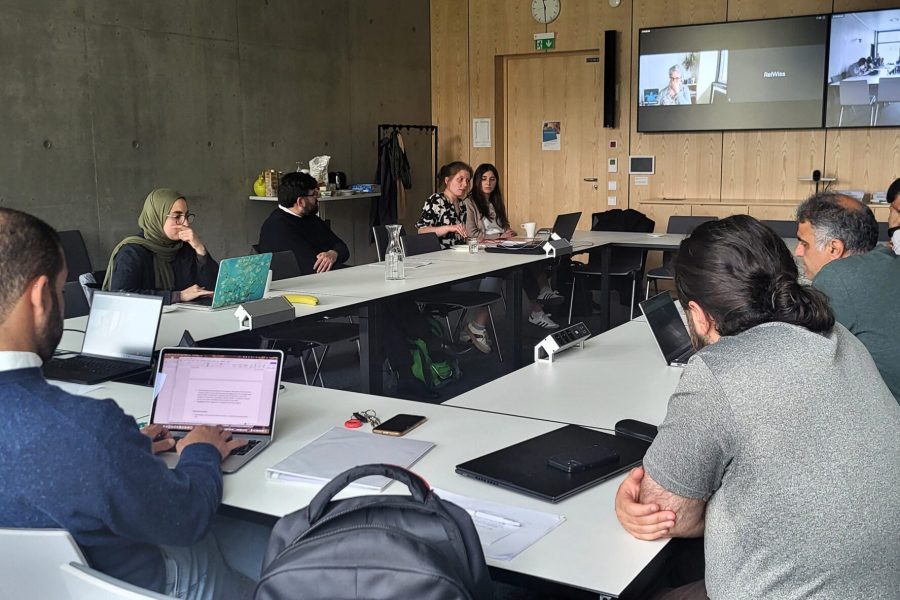
Research Group in Erfurt, May 2026
What is digital materiality, and can this concept be usefully applied in Islamic theological studies? To discuss these questions, scholars from the “Islam and Digitality” research group gathered in Erfurt in May.
The first part of the meeting was devoted to discussing the questions raised above, based on a range of different approaches to defining digital materiality that have been proposed in research. While materiality in common parlance is often associated with objects, research in the online sphere, for example, understands materiality as the observable influence of digital material on audiences. Digital materiality thus represents a fruitful concept for group research into the transformation of normative justifications of religious content, hermeneutic methods, aesthetic practices, and constructions of Islamic history brought about by the increasing digitization of religion. The group’s theoretical reflections were rounded out by a keynote lecture by Prof. Dr. Josephine Diecke of the University of Zurich, who traced the shift toward digital materiality using striking examples from film and media studies.
The second part of the meeting was devoted to the work of early-career researchers. Together with Prof. Dr. Anna Neumaier of Ruhr University Bochum, Prof. Dr. Josh Carney of Philipps University of Marburg, and Dr. Fouad Gehad Marei of the University of Erfurt, the group discussed four of the papers that are to be published in an anthology. This includes studies on the visual representation of early Islamic history from a Shi’ite perspective, particularly on Instagram; a case study on the Twelver Shi’ite hadith collection Ṣaḥīfat ar-Riḍā in the context of Iranian databases; findings from an interview study on the audiovisual presence of the Ahmadiyya Muslim Jamaat on social media, as well as an investigation of the practices of remembrance among German-speaking Muslims with a focus on authenticity.